PLC Training for Employees in Dubai
Industrial systems are becoming more advanced, so businesses need workers who can operate, monitor, and troubleshoot automated equipment. Whether in manufacturing plants and production lines or in utilities and industrial facilities, Programmable Logic Controllers (PLCs) have a key role to play in ensuring that operations proceed smoothly. For companies that want to strengthen their staff’s technical skills, PLC training is a practical way to build the knowledge needed to work with modern industrial control systems.
This training method helps employees understand PLC basics, work with control logic, detect faults, and apply their knowledge in real-world situations. If a company is bringing automation into its operations or improving its current maintenance team’s skills, structured training can help employees feel more confident in their work.
What is the importance of PLC training for industrial employees?
PLCs control machinery, production processes, conveyor systems, pumps, motors, sensors, and other industrial equipment. They receive information from connected devices, execute programmed instructions, and manage outputs based on predetermined conditions.
If employees understand how these systems work, they can contribute more effectively to daily operations. They will be better positioned to spot control problems, understand how the equipment behaves, and communicate technical matters to the maintenance and engineering teams.
Our PLC training helps businesses build these capabilities through structured learning that links technical concepts to practical applications.
Key benefits include:
- Employees will develop better skills in troubleshooting by learning to identify common faults related to PLCs and then investigate their probable causes.
- With a deeper understanding of control systems, equipment reliability can be improved through effective fault diagnosis and maintenance.
- There will be a higher level of workplace productivity since employees will be able to deal more confidently with common automation problems.
- Teams gain a good understanding of PLC programming, as well as of inputs, outputs, and industrial control logic.
- Backing for automation projects involves trained staff taking part in equipment upgrades, system integration, and process improvements.
For employers, providing technical training is a practical way to prepare teams for changing operational requirements.
What does the training in industrial automation include?
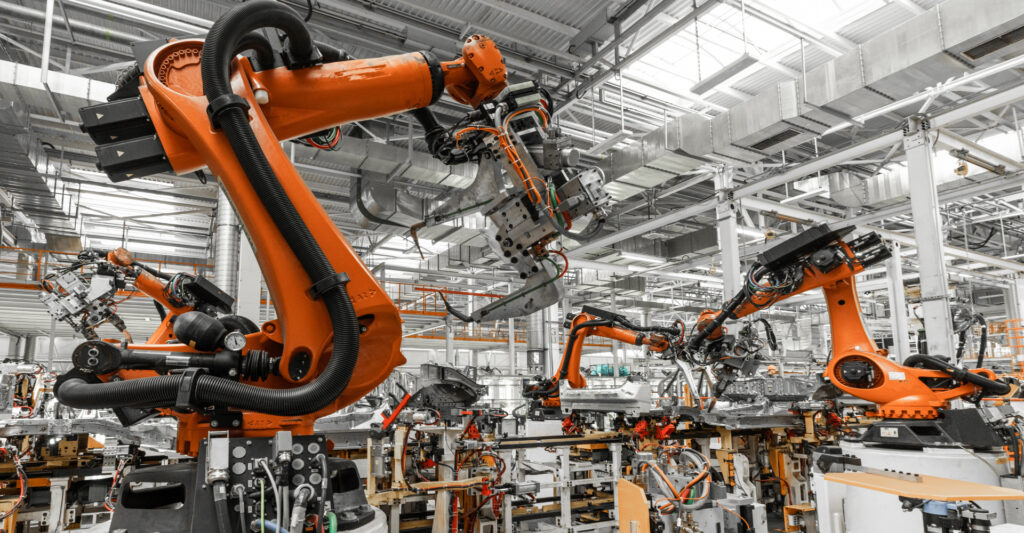
Industrial automation uses control systems, sensors, software, and machinery to carry out industrial processes with as little manual involvement as possible. Programmable logic controllers play a leading role in automation systems.
Industrial automation training can acquaint employees with the key technologies and concepts used in automated industrial environments.
- PLC Fundamentals and System Architecture
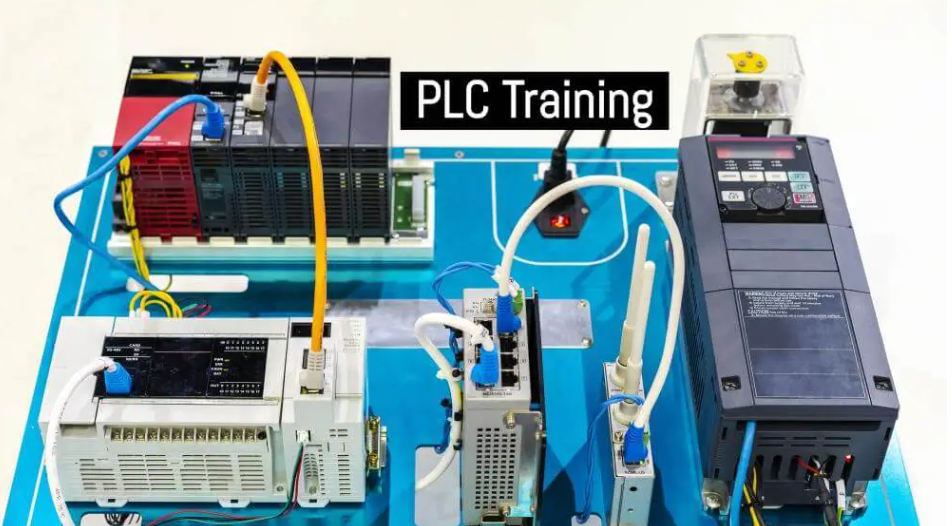
Employees first learn the functions of a PLC and how it communicates with industrial equipment; the training covers the major components: the processor, power supply, input and output modules, memory, and communication interfaces.
Participants also learn the difference between digital and analog signals and how PLCs interact with field devices such as proximity sensors, limit switches, push buttons, and actuators.
This foundation enables employees to understand how control systems function as part of a broader industrial process.
- PLC Programming and Control Logic
Programming is essential to PLC operation, and employees learn how control instructions are organized and how PLC logic determines the behaviour of connected equipment.
Depending on the selected training level and PLC platform, topics may include:
- Ladder logic fundamentals.
- Normally open and normally closed contacts
- Timers and counters
- Internal relays and memory bits
- Motor start and stop circuits.
- Interlocks and sequencing
- Basic control program testing
These ideas help employees understand how automated processes react to different input conditions.
- PLC Troubleshooting and Fault Diagnosis
Production delays can happen if a sensor fails, a motor won’t start, the communication connection breaks, or the control sequence behaves unexpectedly.
Employees should understand how to investigate these problems without making unnecessary changes to a system that is already working.
Training may include how to identify faults, how to monitor the status of the PLC, how to interpret the logic of the program, how to check the input and output conditions, and how to carry out the relevant troubleshooting procedures.
Practical exercises enable the participants to develop a systematic method for diagnosing common control-system problems.
It is essential that when carrying out any work on live industrial equipment, the employer’s electrical safety, isolation, and lockout/tagout procedures be followed. Training alone does not take the place of approved maintenance practices.
- Sensors, Motors, and Industrial Control Applications
PLCs are frequently used together with motors, sensors, relays, contactors, and other control components. When employees understand these connections, they can see how software instructions become physical actions.
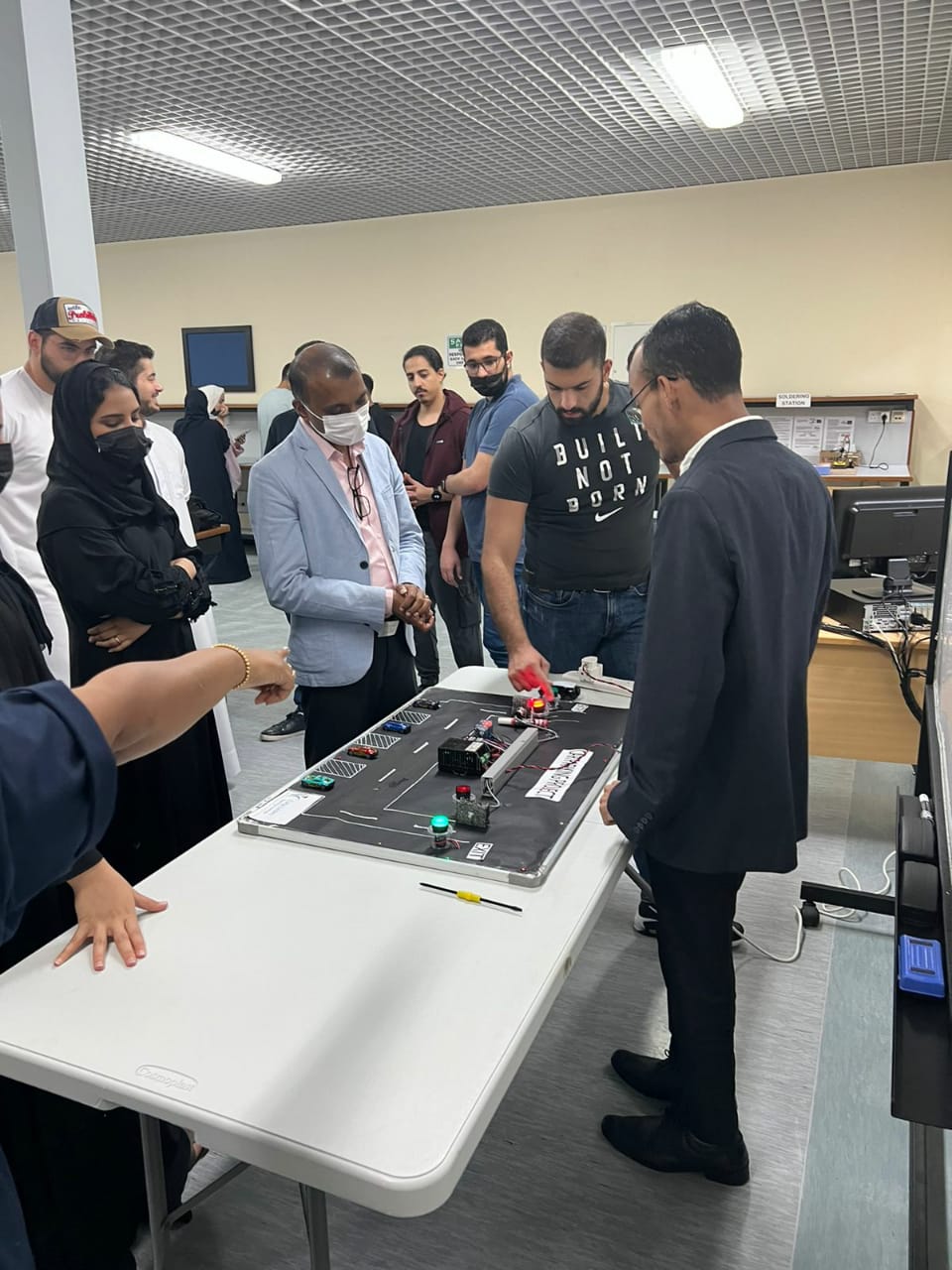
Real-world examples include conveyor movement, tank-level monitoring, pump control, traffic-light sequences, and automated material handling.
These applications make PLC concepts easier to understand because employees can associate programming logic with familiar industrial operations.
- Introduction to HMI and SCADA Systems
HMI systems let operators monitor machinery and participate in industrial processes, while SCADA systems provide monitoring and supervisory control for larger or more widely dispersed operations.
The content of the course may include employees learning about how PLCs communicate with HMI systems, how operators view process information, and the role of alarms in identifying abnormal conditions.
This knowledge enables teams to work with integrated automation environments.
Which employees should take part in PLC training?
The PLC training we provide is suitable for companies that want to strengthen their technical teams’ automation knowledge.
The training may benefit:
- Electrical and electronics technicians
- Mechanical maintenance technicians
- Industrial maintenance engineers
- Automation engineers
- Instrumentation technicians
- Production and manufacturing supervisors
- Plant operators responsible for automated equipment
- Technical employees transitioning into automation-related roles.
People who have a basic knowledge of electricity might find it easier to understand PLC wiring and control logic. But the right starting level will vary based on their experience and the course requirements.
For corporate groups, we suggest choosing training topics based on the equipment, PLC brands, and operational problems employees face daily.
What automation training course is best in Dubai? What should companies look for?
To select the best automation training course in Dubai, go beyond simply comparing course titles; employers should look for a program that matches their team’s technical duties and offers relevant learning activities.
If you are assessing a training provider, then you should consider the following factors.
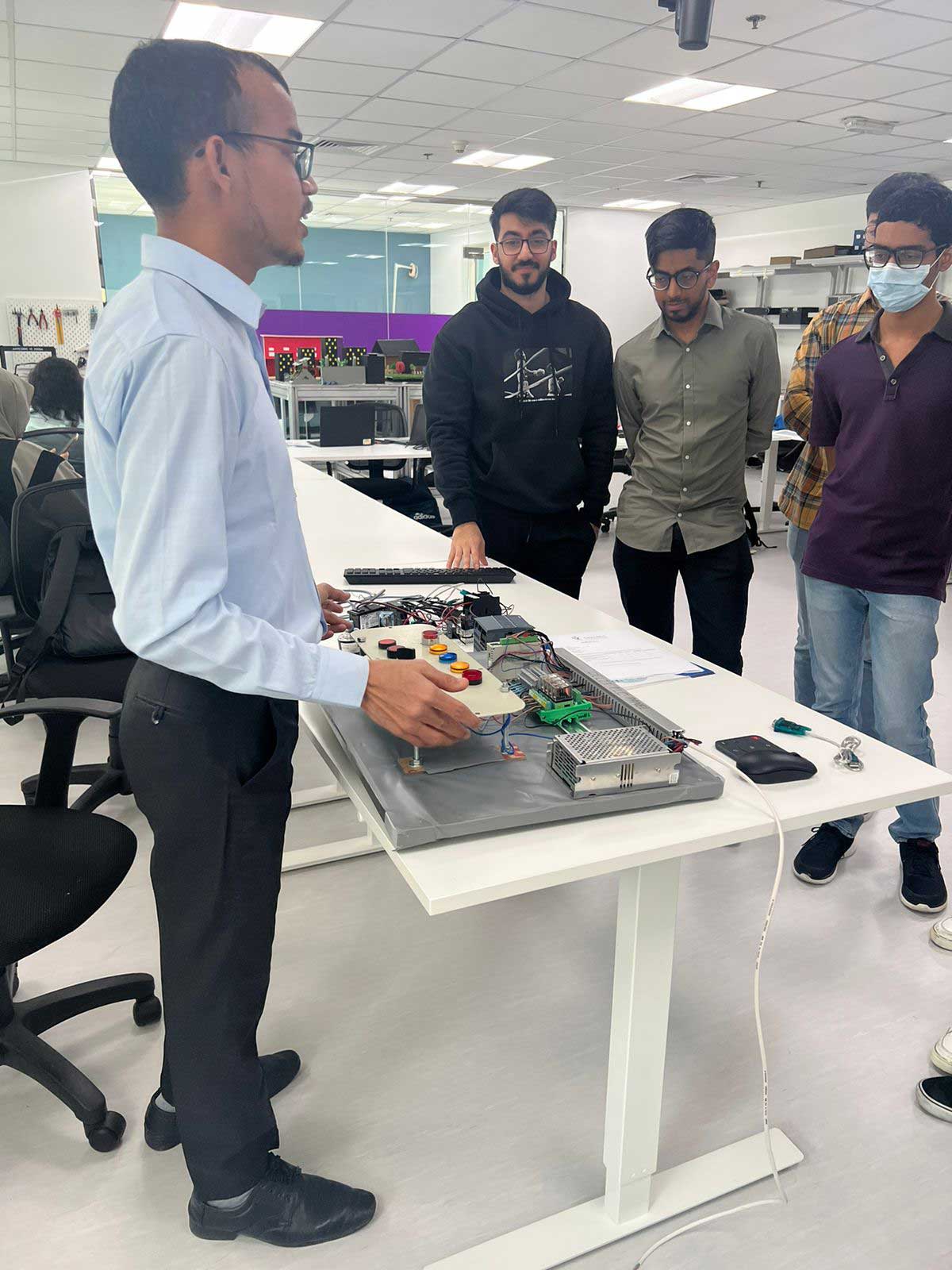
Employees should get the chance to work on programming examples, control sequences, and troubleshooting exercises.
The course material should correspond to the team’s present skill level and to the automation technologies that the company uses.
Trained instructors: It is necessary for instructors to explain technical concepts clearly and to connect them with industrial applications.
Flexible delivery options are available, allowing corporate training to be given at a training facility, online where suitable, or via an arrangement agreed in connection with the employee’s workplace.
Employers should know what participants are expected to know or be able to do by the time they finish the program.
Dubai-based companies may apply these criteria to determine which training meets both their current operational requirements and their longer-term workforce development goals.
The right program should give employees a solid foundation while allowing employers to choose additional topics to match their technical needs.
Corporate PLC Training: A Practical Approach for Businesses
While individual employees may benefit from open-enrolment courses, corporate training lets companies improve the skills of an entire team.
A program specifically designed for a company can be organized according to the participants’ experience, the equipment they use, and the tasks they carry out; for instance, a maintenance team might require more troubleshooting practice, whereas employees who are new to automation would need a solid background in PLC architecture and ladder logic.
Our corporate training approach can be organized around several stages:
- Work out what training is required: decide on the technical skills that employees need to develop.
- Set out the learning objectives by choosing the PLC concepts and industrial applications that are relevant to the team.
- Provide structured training by giving explanations, demonstrations, and practical exercises.
- Check how well employees understand the material by using some exercises or assessments.
- For further development, it is necessary to determine the areas that need additional training or supervised experience in the workplace.
This method allows employers to link training results to their business needs.
Structured automation training can help develop the workforce in manufacturing, utilities, industrial maintenance, engineering, and other technical sectors for companies operating in the UAE.
How PLC Skills Support Career Development
PLC knowledge can strengthen an employee’s technical abilities, especially in roles related to maintenance, electrical systems, production equipment, and industrial automation.
Employees with a strong understanding of PLC fundamentals are better positioned to support control-system troubleshooting, participate in automation projects, and work with engineers responsible for equipment performance.
Further development could include advanced PLC programming, industrial networking, HMI configuration, SCADA fundamentals, motion control, and robotics, depending on the employee’s career objectives.
Employers may also use training as part of an overall skills-development program, enabling employees to build their technical abilities as workplace technologies change.
Finishing a training course does not mean that a person is qualified for all automation positions. The requirements for a job will vary according to the candidate’s practical experience, technical qualifications, knowledge of the equipment, and the duties of the position.
FAQs
Q1. What does PLC training consist of for employees?
PLC training helps employees learn how Programmable Logic Controllers function and how they control industrial machinery and processes. The specific course offered may include instruction on PLC architecture, ladder logic, input and output devices, troubleshooting, and basic automation applications.
Q2. Who is eligible to take part in PLC training?
PLC training benefits electrical technicians, maintenance professionals, automation engineers, industrial operators, and other technical staff. Newcomers can start with the basics, while more experienced employees can focus on advanced programming and troubleshooting.
Q3. What does the industrial automation training include?
Industrial automation training can include PLC programming, sensors, motors, control circuits, industrial communication, HMI systems, the basics of SCADA, and troubleshooting. The specific topics will vary according to the level of the course and the technologies chosen by the training provider.
Q4. How can we select the best automation training course in Dubai?
Check that the course material is relevant, that there are practical exercises, that the instructors are experienced, that the learning objectives are clear, and that the method of delivery is appropriate for your employees. Companies should also consider whether the training aligns with their current equipment and the technical skills that their teams require.
Q5. Can companies arrange for PLC training to be tailored to their employees?
Certainly, corporate training programs can often be adjusted to account for employees’ experience levels, company requirements, and the specific industrial applications involved. Before finalizing the program, businesses should talk to the training provider about their learning objectives, preferred delivery method, and equipment requirements.
Q6. Will training in PLCs be of use to maintenance teams?
Yes, PLC training can help maintenance teams understand control logic, monitor system conditions, identify common faults, and communicate more efficiently with automation engineers; however, employees must still follow authorized maintenance and industrial safety procedures.
Q7. Is some prior programming experience necessary for PLC training?
Not always. Many introductory courses start with basic PLC concepts and simple control logic. Some advanced courses may require previous electrical, instrumentation, or PLC programming knowledge, so employees should check the entry requirements before enrolling.
Develop Your Team’s Industrial Automation Skills
As industrial operations become more automated, employees need the technical knowledge to work confidently with modern control systems. Well-planned training can improve troubleshooting, strengthen equipment knowledge, and prepare teams for changing workplace requirements.
Our PLC Training for employees supports organizations seeking structured learning in programmable controllers and industrial automation. By selecting relevant content and focusing on practical applications, businesses can build the technical skills they need to support operational goals.
If your organization plans to build automation capabilities for its maintenance, engineering, or production team, consider a corporate training program tailored to your employees’ current skills and future requirements.
Contact our training team to discuss your PLC and industrial automation training requirements
and identify a suitable program for your workforce.