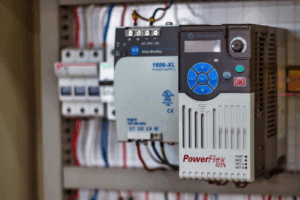

PLC Programming
Introduction to PLC Programming
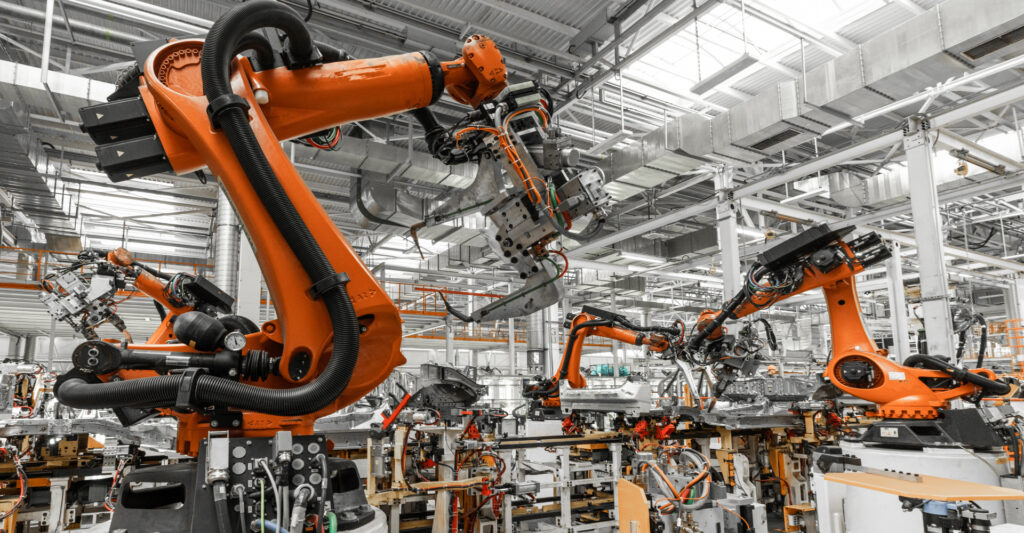
Every time a conveyor belt moves with precision, or a robotic arm welds a car frame flawlessly, there’s a silent commander in charge: a Programmable Logic Controller (PLC). PLC programming is the art and science of giving life to industrial machines. It’s about writing logic so systems can make decisions, react to inputs, and execute actions automatically.
From manufacturing floors to water treatment plants, PLCs are at the heart of automation. If you’ve ever dreamed of controlling machines, reducing human error, or building intelligent systems that respond in milliseconds—then PLC programming is your gateway.
What is a PLC?
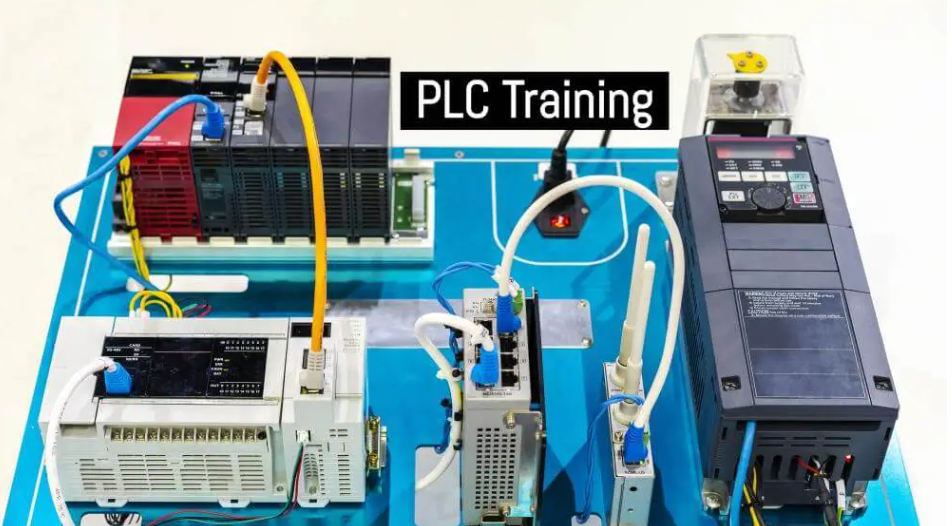
A PLC (Programmable Logic Controller) is a ruggedized digital computer used to control electromechanical processes. It monitors inputs, makes decisions based on its programmed logic, and controls outputs to automate processes.
Unlike regular computers, PLCs are built to withstand dust, temperature extremes, electrical noise, and vibration—making them ideal for industrial settings.
Key components of a PLC include:
- CPU (Central Processing Unit): The brain of the system
- I/O Modules: Interface between the controller and the real world
- Power Supply: Keeps everything running
- Programming Device: Where you write and load the logic
How PLCs Work
The PLC continuously performs a cycle called the scan cycle, consisting of:
- Reading Inputs: Checks the status of connected devices (sensors, switches).
- Processing Logic: Executes the program stored in its memory.
- Updating Outputs: Turns on/off devices like motors, valves, or lights.
This loop happens within milliseconds, enabling real-time control that’s crucial in fast-paced industrial environments.

PLCs
Common PLC Programming Languages
There are five languages defined under the IEC 61131-3 standard, but the most widely used are:
Ladder Logic (LD)
This resembles electrical relay diagrams and is favored for its visual simplicity. It’s often the first language taught to beginners.
Function Block Diagram (FBD)
Uses blocks to represent functions, great for systems needing analog processing or PID control.
Structured Text (ST)
A high-level, text-based language similar to Pascal. Ideal for math-heavy or complex algorithms.
Each language serves different use cases, and the best PLC programmers often know more than one.
Real-World Applications of PLC Programming
PLCs are used in nearly every automation scenario. Here are some real-life applications:
- Packaging Machines: Timing and sequence of filling, sealing, and labeling
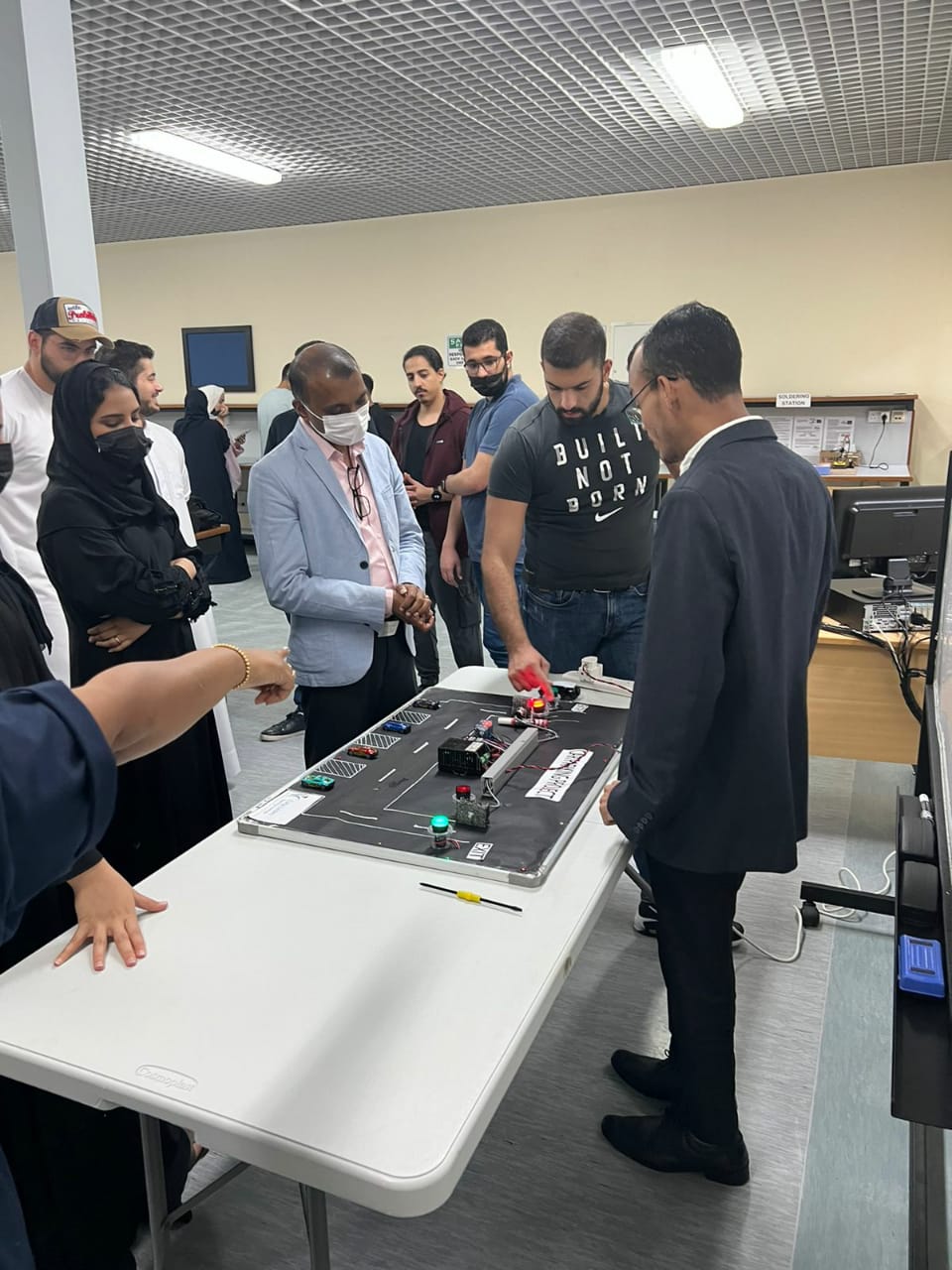
- Traffic Signals: Coordinating light changes based on traffic flow
- HVAC Systems: Monitoring and regulating temperature
- Smart Factories: Synchronizing robotics and conveyors in production
Wherever there’s repetitive work or timing-based logic, you’ll find a PLC behind the scenes.
Benefits of Learning PLC Programming
Learning PLC programming opens up a new world of possibilities:
- High-Demand Career Paths: From manufacturing to energy, skilled PLC professionals are in demand.
- Lucrative Salaries: PLC technicians and engineers often earn above-average wages.
- Job Security: Automation isn’t going anywhere—it’s only growing.
- Hands-On Satisfaction: Design something, program it, and watch it work in real-time.
Whether you’re an electrician, engineer, or curious student, PLC knowledge is a smart investment.
PLC Programming Training Promo
Want to Learn PLC Programming from Scratch In UAE?
Our PLC Programming Course gives you real-world skills in Ladder Logic, HMI, SCADA, and more.
Get hands-on with simulations and build projects that matter.
🎓 Beginner-Friendly | 🧰 Tools Included | 📜 Certification Provided
👉 Register @ [email protected] +971522729489
Industries That Rely on PLCs
PLCs are the backbone of automation across many sectors:
- Automotive: Robotic welding, part assembly, and paint booths
- Food & Beverage: Bottling, packaging, pasteurization
- Pharmaceuticals: Clean room monitoring, batch processing
- Water/Waste Management: Pump control, treatment cycles
- Oil & Gas: Drilling rigs, refineries, pipeline automation
Automation has become the norm—not the exception.
Skills You Need to Succeed in PLC Programming
Success in PLC programming depends on mastering both the tools and the thought process. Key skills include:
Ability to troubleshoot and optimize processes
Logical and sequential thinking
Basic understanding of electronics and circuits
Familiarity with industrial components (sensors, relays, actuators)
Tools of the Trade: Popular PLC Software
Depending on the PLC brand, you’ll use specialized software. Here are some leading examples:
| Brand | Software Used |
| Allen-Bradley | RSLogix / Studio 5000 |
| Siemens | TIA Portal |
| Mitsubishi | GX Works |
| Schneider Electric | EcoStruxure |
Best Practices for Writing PLC Code
Writing code that works is one thing—writing code that lasts is another. Here are some expert tips:
- Comment generously: Make future changes easier.
- Modularize: Break logic into manageable sections.
- Use timers and counters wisely: Avoid system lag.
- Test everything: Simulate before going live.
- Fail-safes are essential: Always plan for power loss or device failure.
Career Opportunities After Learning PLC Programming
Once trained, you could land roles such as:
- Automation Technician
- Controls Engineer
- PLC Programmer
- SCADA Specialist
- Maintenance Engineer
Many of these roles offer growth paths into project management, design, or consulting.
Is PLC Programming Hard to Learn?
No! While it sounds technical, the logic behind PLC programming is actually quite intuitive. If you can break down problems into steps, you can program a PLC.
Start with basic logic like turning on a light with a switch, then move up to controlling entire systems. The learning curve is manageable—and extremely rewarding.
Conclusion
PLC programming is more than a technical skill—it’s a ticket to the future. With automation leading every industry, the ability to program and manage PLCs is invaluable. Whether you’re looking to upskill, change careers, or build smarter systems, learning PLC programming is a game-changing move.
Take the leap, start building logic, and let machines do the work.